
Why Do Some Noses Look Natural After Surgery – and Others Don't? | Rhinoplasty in Zurich, Switzerland
We specialize in rhinoplasty in Zurich. The goal is not a completely new nose, but a harmonious and balanced version of your own nose. Every nose surgery is planned individually - so that it fits perfectly with your face and your proportions.

Introduction
One of the most common questions in aesthetic nasal surgery is not whether an operation is possible, but whether the result will later look natural or remain recognizable as "operated."
Many patients put this uncertainty very directly:
Why does a nose look completely natural after surgery in some people, while in others it is immediately obvious that surgery was performed?
This question is central because it concerns not only the aesthetic result, but also the emotional perception after the procedure.
In modern nasal surgery, the goal is no longer a "perfect" nose in the classic sense, but a nose that blends harmoniously into the face and is not perceived as operated.
What does a natural rhinoplasty in Switzerland mean?
The term "natural" is not clearly defined medically, but patients feel it very precisely.
A natural nose is not necessarily a perfect nose. Rather, it is a nose that does not stand out, but is perceived as part of the face.
In practice, this means:
- no visible correction
- no artificial symmetry
- no over-smoothed structures
- no excessive refinement
Naturalness therefore does not arise from an ideal shape, but from integration.
The most important factors for a natural result in Zurich
Whether a nose looks natural after surgery does not depend on a single factor, but on several levels working together.
1. Anatomical starting situation
The starting anatomy is the most important factor influencing the later result.
This includes:
- skin thickness
- cartilage stability
- shape of the nasal bridge
- width of the nose
- asymmetries in the face
Significance in practice
Two patients can undergo a similar operation and still have completely different results.
The reason is that every nose "reacts" differently. The skin behaves differently, the tissue heals differently, and the structural foundation is never identical.
2. Surgical overcorrection
One of the most common reasons for an unnatural result is too strong a change.
Typical signs of overcorrection:
- a nose shape that is too narrow
- strongly defined, "hard" contours
- an unnaturally small nasal tip
- loss of individual character
In practice it becomes clear: the more one tries to shape an "ideal" nose, the more often an artificial impression results.
Naturalness often arises from restraint, not from maximization.
3. Loss of individual facial features
Every face has small asymmetric elements that make it unique.
If these are removed completely, mathematical symmetry results, but often not a natural overall picture.
Typical examples:
- slight nasal deviations
- minimal differences in rotation
- natural irregularities
These elements are often decisive for the authenticity of a face.
4. Skin and soft-tissue response
Healing is an often underestimated factor.
After surgery, the tissue responds individually:
- swelling behavior
- scar formation
- tension pattern
- tissue adaptation
Especially in the first months, the result is not yet stable and can change significantly.
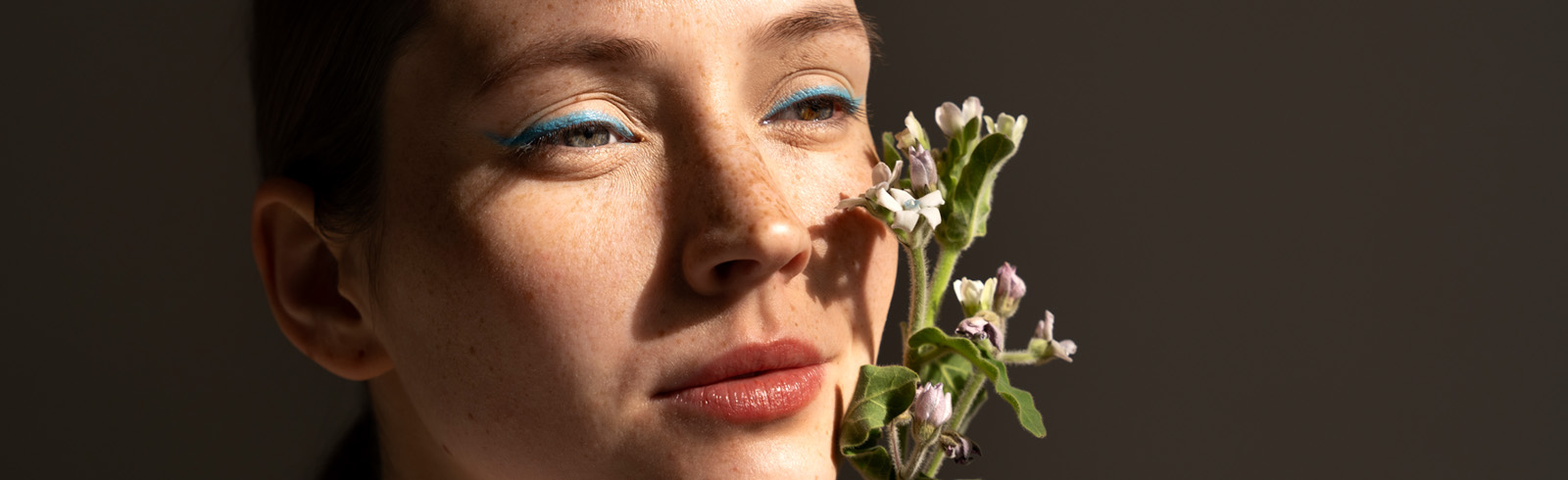
Why some noses look "operated"
The impression of an operated nose usually arises not from the surgery itself, but from certain aesthetic patterns.
Too much perfection
Perfection in the mathematical sense often looks artificial in a face.
The human eye is accustomed to slight irregularities. If these are missing entirely, an artificial impression quickly arises.
Too much reduction
A common cause of an unnatural result is excessive reduction of the nasal structure.
If the nose becomes too small in proportion to the face, the face loses its natural balance.
Lack of integration into the face
A nose can be technically well operated and still not look harmonious if it does not suit the face as a whole.
What always matters is the relationship to:
- chin
- lips
- eye area
- cheeks
The role of surgical philosophy
A key difference between natural and conspicuous results lies in the surgeon's aesthetic approach.
Structured but restrained change
A natural rhinoplasty is not based on maximum change, but on targeted harmonization.
This means:
- preserving the individual structure
- careful adjustment instead of radical change
- focus on the overall picture rather than a single feature
Face rather than nose
The decisive change of perspective is that the nose is not viewed in isolation, but the face as a whole.
A nose is well operated when it is no longer perceived as a single element.
Why a rhinoplasty in Zurich looks different for every patient
In practice, one of the most common misconceptions is the assumption that a particular technique always leads to a similar result.
In reality, many factors influence the outcome:
- individual healing
- skin behavior
- tissue tension
- anatomical starting situation
- response to scar formation
This explains why results are always individual, even with a similar surgical technique.
When is the final result of a rhinoplasty in Switzerland visible?
Another important point is time.
After a rhinoplasty, the result changes over the course of months.
Typical phases:
- first weeks: swelling dominates
- 3–6 months: the shape begins to stabilize
- 12 months: final structure visible
Many patients judge the result too early, which can lead to uncertainty.
Expectation vs. reality with natural results
The expectation of many patients is a "perfect, but invisible" change.
The reality is more nuanced:
A natural nose is visibly changed, but not recognizable as operated.
This means:
- harmonious instead of perfect
- integrated instead of conspicuous
- individual instead of standardized
How can you recognize an operated nose?
- a nose that is too narrow
- an unnaturally defined nasal tip
- exaggerated symmetry
- lack of harmony with the face
- excessive reduction
Frequently asked questions about rhinoplasty in Zurich
"Will people be able to tell I had surgery?"
That does not depend on the surgery itself, but on the type of change and its integration into the face.
"Why do some results look artificial?"
Mostly due to overcorrection, excessive reduction, or failure to consider the face as a whole.
"Can every nose be operated on naturally?"
Not every starting anatomy allows every kind of change, but every nose can be harmonized.
Choosing the right surgeon
The choice of surgeon is decisive for a natural result.
Important factors:
- specialization in nasal surgery
- understanding of facial aesthetics
- conservative surgical philosophy
- experience with complex cases
- honest communication of limitations
A good surgeon can be recognized by the fact that he does not recommend every change.
Conclusion
Whether a nose looks natural after surgery or is recognized as operated does not depend on a single factor.
What matters is the interplay of:
- anatomy
- surgical restraint
- individual healing
- and an aesthetic view of the whole face
The goal of modern rhinoplasty is not perfection, but harmony.
Or put differently:
A good rhinoplasty is not recognized by the fact that it stands out – but by the fact that it looks self-evident.
For more information, please contact us!